
“I’m so sorry, but we have to go back.”
Two years ago, I had to cut short a gorgeous morning climb because a guest from Portland showed up wearing cotton sweatpants, flip-flops, and carrying a single 16-ounce water bottle for a three-hour desert trip. I’ll never forget how disappointed I was.

She looked at me like she didn’t understand. “But I looked up what to bring on a trek in the desert, and it suggested wearing comfortable clothes and bringing water. This feels good!
That moment is the exact example of why I’m writing this guide. Sonoran Desert hiking gear isn’t only for looking cute in Instagram shots, though you’ll want those photos. It’s about being safe, comfortable, and really enjoying the amazing experience instead of counting down the minutes until you can get back to your air-conditioned hotel room.
I’ve seen every wardrobe mistake you can think of after eight years of showing people around Arizona’s beautiful but harsh scenery.
Quick Checklist (Stick This On Your Phone)
Bring these with you on any Sonoran Desert hike:
- 2–3 liters of water (more in summer)
- Wide-brim hat + sunglasses
- Lightweight long-sleeve shirt with SPF or a breathable tee
- Hiking shoes with good tread (no flats) and moisture-wicking socks
- Sunscreen (SPF 30+), lip balm with SPF
- Small first-aid kit, electrolyte tablets, snacks (protein bar)
- Lightweight daypack, headlamp if you start early/dusk, phone with a charged battery
My Own Desert Fashion Disaster: A Humbling Beginning
When I moved to Arizona from Iowa in 2012, I felt I knew everything there was to know about outdoor activities because I was an athlete. In the Midwest, I had run a lot of trail runs, marathons, and Ironman triathlons. What could be so different about trekking in the desert?
I found out that it was very different when I hiked South Mountain by myself for the first time in July.
I wore my favorite black running tights (mistake #1), a cotton t-shirt (mistake #2), and packed what I believed was enough water—two tiny bottles that held around 32 ounces (mistake #3). I also overlooked sunscreen because it was just 6 a.m., and how much damage could the sun really do before 9 a.m.?
Turns out, a lot.
By the second mile, my black tights were so hot that it felt like my legs were roasting. The cotton shirt was wet with sweat and rubbing against my skin. I had already completed both water bottles, although I was only halfway through my intended trip. Even though it was early, I could feel my shoulders starting to hurt. That experience showed me that the things you need for desert hiking are those you need to stay alive and comfortable.
The Sun is Not Your Friend
The most important part of Sonoran Desert hiking gear is keeping oneself safe from the hot Arizona sun.
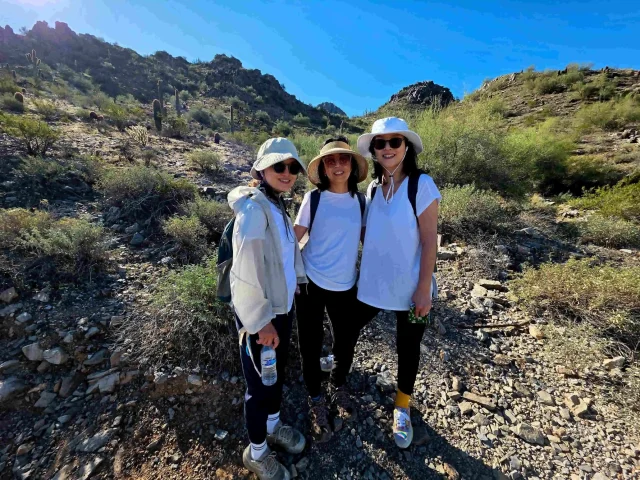
Wide-Brim Hat: I took a family from Seattle on a tour last month, and they all wore baseball caps. We hiked for two hours, and by the end, the dad’s ears were so burnt that they were peeling. You need a hat with a big brim. The brim should be at least 3 inches wide all the way around to keep your face, ears, and neck safe.
I like a lightweight, breathable safari-style hat with a chin strap the most. The strap holds it in place when the desert winds pick up (and they will), and the ventilation stops your head from getting too hot.
Sunscreen (SPF 30+): Most visitors don’t know this: The UV index in Arizona often reaches “extreme” levels, even in the winter. I tell every guest to put on sunscreen 20 minutes before we start hiking so that it can soak in properly. We also put it on again every hour during the trip.
Pro tip: Don’t forget your ears, the back of your neck, and the tops of your hands. I have seen too many people leave Arizona looking like lobsters because they missed these places.
Sunglasses: Good sunglasses protect your eyes from UV rays and make it easier to see in the desert. I like styles that wrap around my head so that light can’t get in from the sides.
Lip Balm with SPF: Your lips can become sunburned, too. And there’s nothing worse than having cracked, sore lips ruin the remainder of your trip. Keep SPF lip balm close to hand. I use a carabiner to attach mine to my backpack so I never lose it.
Desert Hiking Clothing: Fabric Matters More Than Fashion
The person from Portland who wore flip-flops told me that people really don’t get how different desert hiking clothes need to be from regular gym clothes.
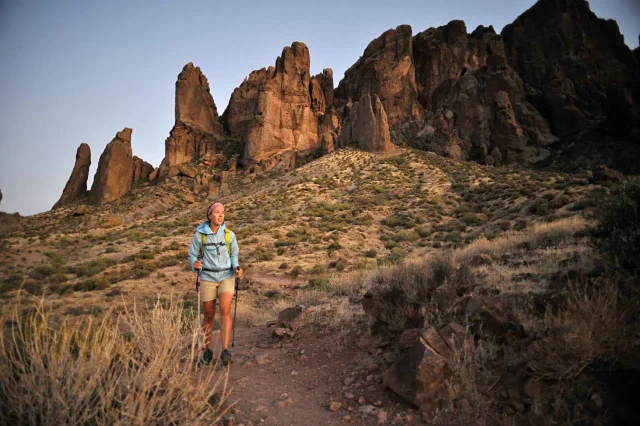
Moisture-Wicking Long-Sleeve Shirt: This goes against what most people think, but long sleeves are good for you in the desert. The lightweight, moisture-wicking fabric with UPF protection keeps you cooler than skin that is exposed to the sun by shielding direct sunlight and letting perspiration drain.
I swear by synthetic or merino wool, but never cotton. Cotton soaks up sweat and stays wet, which makes it feel clammy and uncomfortable and raises the risk of both overheating and chills.
Hiking Pants or Convertible Pants: Shorts may seem like a good idea for hot weather, but longer pants protect your legs from the sun, scratchy desert plants, and the occasional cactus that reaches out to say hello while you’re not paying attention.
Lightweight, quick-drying hiking pants with zip-off legs let you change from pants to shorts if the weather gets too hot. I like jeans with a lot of pockets so I can easily get to my munchies, phone, and lip balm.
Proper Hiking Footwear: This is non-negotiable. Every season, I get guests who wear sandals, flip-flops, or designer sneakers with no tread on them. Hiking shoes for the desert need to support the ankles, have aggressive tread for loose gravel and rock, and fit well with hiking socks.
What I think you should do is… Hiking boots or trail shoes that are light and have high grip. Before you go on your journey, break them in. Blisters may end a hike faster than anything else. And definitely use the right socks for trekking (synthetic or wool blends that keep your feet dry and stop blisters).
Hydration Desert Hiking: More Water Than You Think
Do not underestimate water needs.
My rule is to bring at least one liter (33 ounces) of water for every hour of hiking. That’s three liters at the very least for a three-hour morning hike. I normally suggest four liters to be safe.
Last winter, I took a guest from Minnesota who said she “never drinks that much water.” By the second hour, she had drunk all three liters and was asking if I had more. The desert doesn’t care about how much water you usually drink; it wants more.
Hydration System Options:
- Hydration bladder: My personal favorite because it allows continuous sipping without stopping
- Water bottles: More traditional, but require stopping to drink
- Combination: One bladder for easy access, bottles for backup
Electrolyte pills are also very important for hiking in the Sonoran Desert. When you’re sweating a lot, plain water isn’t enough. I bring electrolyte tablets or powder with me to add to water to make up for the salt and minerals I lose while I sweat.
The Backpack Essentials: Desert Hiking Gear Checklist
Emergency First Aid Kit: At the very least, it should have bandages, moleskin or blister patches for treating blisters, painkillers, antihistamines for unexpected allergic reactions, and any drugs you use.
Snacks with Protein: Hiking in the desert consumes a lot of calories. Bring trail mix, protein bars, or other goodies that won’t melt. Don’t eat chocolate unless you like drinking it.
Fully Charged Phone: Cell service is usually good in Phoenix and Scottsdale. Your phone is both your camera and your emergency communication device.
Small Multi-Tool or Pocket Knife: You’d be surprised how often this comes in handy—from cutting loose threads to emergency first aid needs.
Lightweight Rain Jacket: The weather in Arizona can change quickly, especially during the monsoon season. A rain garment that can be packed up takes up very little room and can save your life.
Temperature Layers: What to Wear Desert Hiking Year-Round
Winter (November-February): Morning temperatures can drop to around 40°F. Put on layers that you can take off when it gets warmer. A thin fleece or insulated vest over your long-sleeve shirt is a great way to do this.
Spring/Fall (March-May, September-October): These are ideal hiking months with temps ranging from 60-85°F. Stick with the base layering system: a shirt that wicks away moisture, pants that can be turned into shorts, and always being ready to shield yourself from the sun.
Summer (June-August): If you’re trekking in the summer (which I only recommend for early morning outings), it’s even more important to wear lightweight, light-colored, UPF-rated clothes. Begin before the sun rises and end before 9 a.m.
Why Guided Trips Simplify All This
We take care of the logistics at Wild Bunch Desert Guides. We provide backpacks, water, snacks for people with allergies, first aid, and guides who are skilled in medicine and can keep up with the pace of families. Our hiking trips in Phoenix and Scottsdale are set up so you can just show up and enjoy the scenery without having to worry about practicalities. We make each tour fit your party, whether you want a relaxing family walk or a day of hiking and mountain biking that is twice as fun.
Want to feel safe knowing that your guide has done this a thousand times? You can book a private guided hike with Wild Bunch Desert Guides and get ready to see the Sonoran Desert like a local. Call 602-663-0842 or book online, and we’ll take care of the rest.