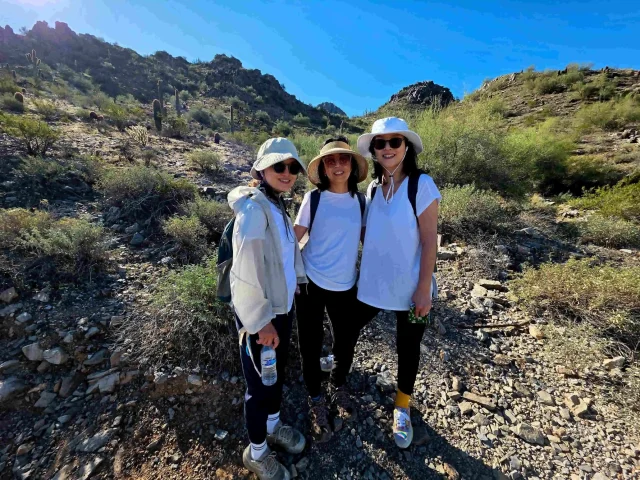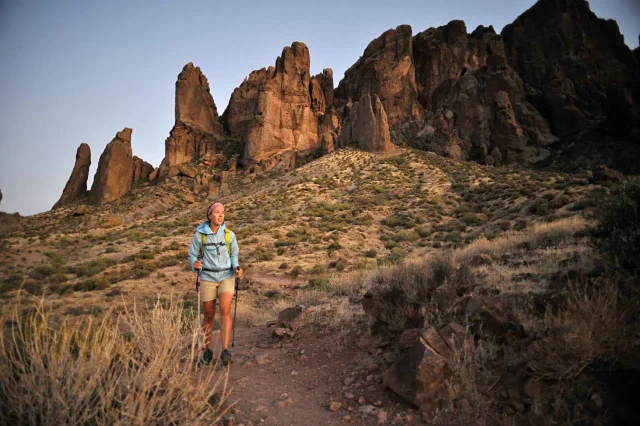

“Can you take us to a place that no one else knows about?”
A couple asked me that over coffee in Old Town Scottsdale after they had already seen the customary Arizona sights, like Camelback Mountain, and were taking pictures of cacti. They weren’t seeking another well-known path. They wanted the real deal in the desert.

Most people assume the Sonoran Desert is easy to see: it’s hot, there are rocks, and there are saguaros. Most of the time, you get that feeling from a car window. But the desert that sticks with you is only a few steps off the main trail. People walk right past it because they don’t know what they’re seeing or what they shouldn’t touch, follow, or ignore.
I learned that early on as a guide. I saw guests who were curious and meant well miss out on stories that had been around for thousands of years and living details because no one had shown them how to interpret the landscape.
The Desert Is Layered
One of my favorite parts of a guided trek is shortly after the sun comes up. The light is gentle, the air is still chilly, and someone always says, “Wow…” It’s very silent.
It isn’t.
They just haven’t learned the sounds yet.
The Sonoran Desert is one of the deserts with the most different kinds of plants and animals. That surprises people. People think deserts are awful places to live because they are arid, lifeless, and unforgiving. But because there are two wet seasons (winter rains and summer monsoons), this area is home to more than 2,000 plant species, innumerable birds, mammals, reptiles, and even whole communities of tiny life that live just below your feet.
You wouldn’t realize it until someone slowed you down and pointed it out.
The soil you’re standing on is dark and gritty. That’s living biological crust, which is made up of bacteria that keep the desert floor stable, let plants flourish, and physically keep the desert from blowing away. You can destroy decades of growth with a single footprint if you step off the route without knowing it.
Most self-guided hikers never learn that. Guides do.
Water Where You Swear There Shouldn’t Be Any
If there’s one thing that defines the Sonoran Desert, it’s water—specifically, how sneaky it is.
Most days, you won’t see rivers flowing. You will see washes, carved stone channels, and smooth canyon walls that tell a distinct story. When the monsoons come, such calm trails turn into roaring highways of water that change the terrain in only a few hours.
I love showing people how to interpret those signs on guided treks around Phoenix and Scottsdale. Where water collects for a short time underground. Why do certain trees grow close to each other? How do animals stay alive for months without seeing a drop on the surface?
People miss these secret areas not because they’re off-limits, but because they’re hard to see.
Without context, it’s just rocks.
With context, it’s survival genius.
Saguaros Have Secrets (And Attitudes)
Everyone wants a picture of a saguaro. Not many people know that this is one of the most picky plants on Earth.
The Sonoran Desert is the only place where saguaros grow. They need the correct amount of moisture, heat, height, and frost-free nights. They grow quite slowly, only about 1 inch a year. It can take 40 to 70 years for arms to show up. Some people never grow any.
And the birds that build nests in them? They aren’t hurting the cactus. The saguaro actually makes a natural “boot” around the hole, which protects both itself and the person living within.
That’s the kind of relationship the desert thrives on—cooperation, patience, balance.
What makes this spot special:
- Saguaros are averaging 150-250 years old
- 40+ foot tall specimens with 15+ arms
- Protected from development and crowds
- Best light conditions at sunrise
- Perfect for unhurried photography and observation
Wildlife You’ll Never Spot Alone (And Shouldn’t Try To)
People often ask me about Gila monsters. People want to see one like it’s on a list.
The truth is that if you see one, you’re lucky. That’s normal if you don’t.
Gila monsters, desert tortoises, kit foxes, and even bobcats don’t make a sound when they come. They show up for a short time, usually at daybreak, and then disappear. It matters when and where you look. It’s more important to know when to provide room.
The same is true for javelina and rattlesnakes. These animals aren’t aggressive. They’re careful. Most accidents happen when people don’t know what indications they are missing. A huge aspect of guided desert tours is keeping tourists safe while still making them feel connected and intrigued.
I took a family to a part of the route that I knew was a regular javelina corridor early one morning in April. We got there before daybreak and waited silently next to a thick group of creosote bushes.
At 6:15 a.m., seven javelinas came out of the brush. The babies chased each other around while the adults watched. We watched for twenty minutes of magic before they left.
That same morning, we spotted:
- A Harris hawk hunting from a saguaro perch
- Two roadrunners performing their mating dance
- A coyote trotting across the trail
- Countless desert cottontails
- A great horned owl returning to its daytime roost
Ancient Petroglyphs: Secret Sonoran Desert Sites
The rocks in the Sonoran Desert tell the story of thousands of years of human history. But the most amazing petroglyph sites aren’t the well-known ones that are easy to get to and are on every tourist map.
Last September, I took a retired archaeologist and his wife to a hidden rock face that I had found by accident five years before. We bushwhacked off the track (again, don’t do this alone) and used only landmarks that a local would know to find our way.
When we got there, the archaeologist absolutely gasped. The rock was covered with hundreds of petroglyphs, some of which were more than 1,000 years old. They showed geometric shapes, people, animals, and strange symbols. He said with respect, “This is Hohokam work,” as he looked at the old carvings. “Before the pyramids of Egypt were old, these people lived here. And we’re the only ones here.
To keep these places safe, they need to be kept away from crowds. Wild Bunch guides know where they are and follow the rules. We instruct guests to leave no trace and make sure they know they are seeing something holy.
Sunrise Is the Desert’s Love Language
People are scared of summer in Phoenix and Scottsdale, and they should be if they don’t know what they’re doing.
That’s why people who live there don’t hike in July at midday. We hike in the morning. We ride at dawn. We finish before the heat gets too hot.
Some of the most magical times in the Sonoran Desert happen when the sky goes from indigo to pink, when saguaros cast lengthy shadows, and when the air smells like creosote from the humidity of the night before.
Why “Hidden” Often Means “Safer With a Guide”
Not every beautiful place is meant to be explored freely.
Some trails are far away. Some land looks easy at first, but then it gets hard. Some places, including exposed ridgelines or rough backcountry trails, are better suited for experienced hikers who know the area well.
At Wild Bunch Desert Guides, we’re honest about that. We pick routes that are safe, beautiful, fun, and interesting, especially for families and people who are going to the desert for the first time.
And when we compare our guided routes to more challenging hikes, it’s all about being honest. The desert doesn’t care if you’re feeling brave. It pays to be ready.
Explore the Sonoran Desert the Wild Bunch Way
Maps don’t show the hidden parts of the Sonoran Desert. They live in time, consciousness, and stories that someone who knows the land tells to someone who wants to learn about it.
That’s what we do.
Wild Bunch Desert Guides can help you see Phoenix and Scottsdale like a local, safely, meaningfully, and without any guesswork.
About the Author
Laurel Darren is the founding owner of the Wild Bunch Desert Guides, a 5-star rated adventure tour company that offers guided hiking tours and guided mountain biking tours in Arizona’s picturesque Sonoran Desert in the Phoenix/Scottsdale area. Arriving in the legendary “Valley of the Sun” in 2012 — from the home of John Deere in the Quad Cities of Eastern Iowa/Western Illinois — this corn-fed Midwest girl brought 30 years of athletic chops under her chaps. A 3-sport high school standout and former college softball player – who won her conference’s Athlete of the Year award as a prep senior – Darren has graduated to competing in many races as an adult, from road running and cycling, to cyclo-cross and Mountain Bikes, and even Duathlon and Triathlon “Ironman” competitions. Darren was a popular, top-rated senior mountain bike guide at Arizona’s Outback Adventures before branching out to start her own small adventure business in 2016. To book a guided mountain bike tour or guided hiking trip – or a combination of the two adventures – please visit the home page www.wildbunchdesertguides.com or call 602-663-0842